


What is a PEG Ratio?
The PEG ratio is an enhanced version of the equity market’s most common valuation tool, the P/E or Price to Earnings ratio. P/E ratios are particularly useful for comparing companies within the same industry. Generally, investors prefer to buy companies with low P/E ratios.
Calculation of P/E Ratio
P/E ratios are calculated using the following formula:
P/E ratio = Stock Price per Share / Earnings per Share
Understanding the PEG Ratio
The Price-Earnings-to-Growth ratio is used to determine a stock’s value by also factoring the company’s forecasted earnings growth. The PEG ratio, unlike the P/E ratio, also considers the company’s future growth potential. The formula for a PEG ratio looks like this:
PEG ratio = P/E ratio / EPS Growth Rate
Important Inputs for Calculating PEG Ratios
Three important inputs are necessary to calculate PEG ratios. These input factors are:
- Stock price
- EPS data
- Consensus data on future EPS growth rates
Interpreting PEG Ratio Results
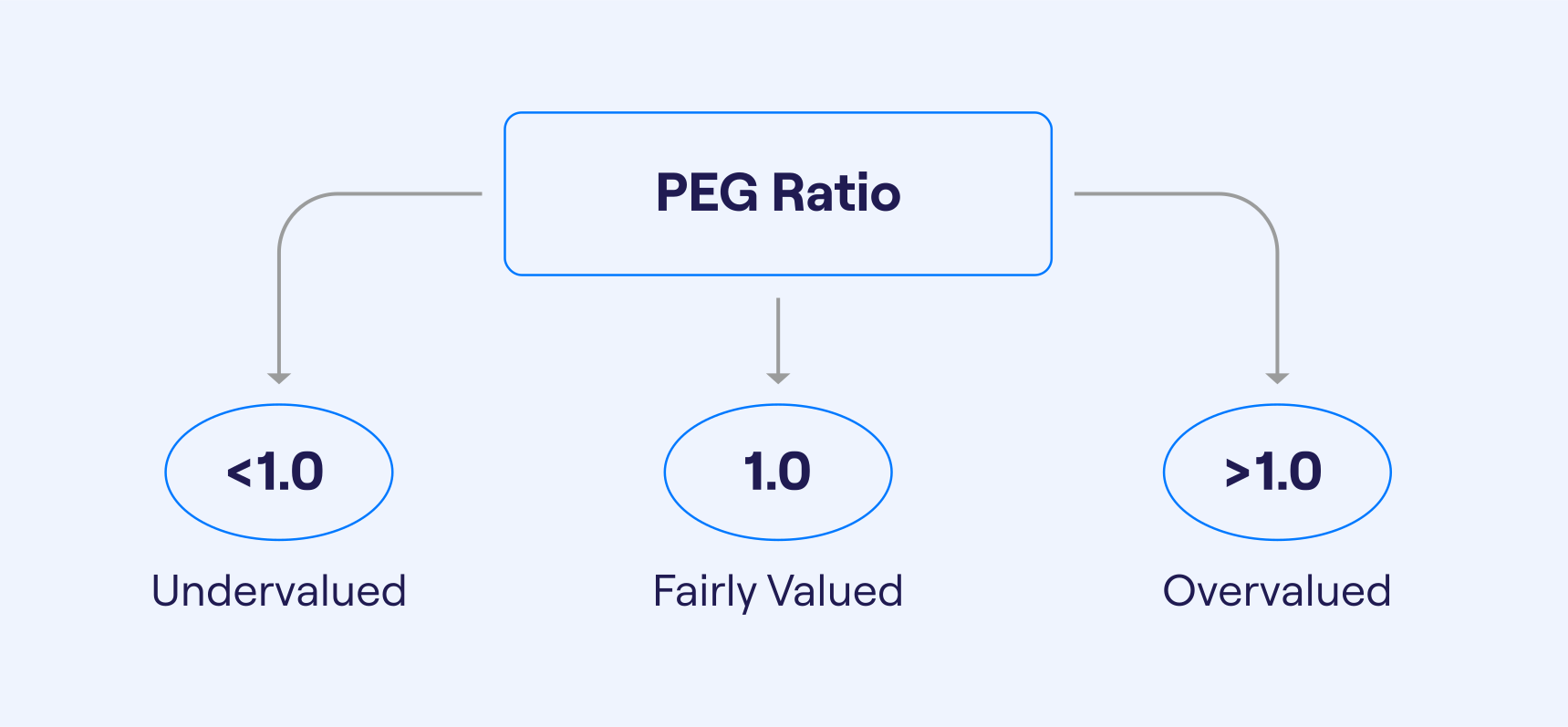
The lower the PEG ratio, the more attractive the company’s investment potential. On the other hand, a high ratio could indicate that a stock is overvalued relative to its future earnings potential. It is important to note that the PEG ratio is only one investment tool in the equity market valuation toolbox. We suggest a more comprehensive analysis be performed prior to purchasing stocks.
Calculating EPS Growth Rates from Financial Data

Using the PEG ratio and formula,we can calculate the 5-Year inputted EPS growth rate. They are Microsoft 15.56%, Apple 17.12%, and Google 17.20%. Based on this data, Google/Alphabet looks most attractive given its lowest PEG ratio, P/E ratio, and highest EPS growth rate.
What are the Limitations of PEG Ratio?
- Companies can have other features that give their stocks value other than earnings growth. For example, Dividend Stocks attract a segment of the market which values attractive current cash flow (i.e. retirees). This makes the PEG ratio less meaningful.
- The PEG ratio does not factor in Free Cash Flow. Therefore, EPS growth doesn’t always result in Cash Flow growth (i.e. sometimes high Capital Expenditures are needed to support high EPS growth).
- PEG ratio also not useful for companies without earnings. For example, technology companies could trade at high multiples for years without earnings.
- PEG ratios also do not capture the companies that carry large amounts of Cash on their balance sheets. In these situations, Price/Book Value (P/B) ratios should be employed.
- Finally, PEG ratios can be less meaningful if EPS growth estimates prove to be inaccurate. Clearly, forecasting earnings 5-Years in the future is far more difficult than publishing 1 and 3-Year growth estimates.
“The person who turns over the most rocks wins the game”. - Peter Lynch
Ready to start
Open your account in minutes and let our team handle the rest.
